
Navigating the winter dark: a path to more energy
Below we look at what happens in the body when we get too little sunlight and how massage can help improve both health and well-being through the winter dark.
Winter months can feel long and demanding. Short days and little sunlight mean less energy and lower reserves. Even though the days slowly get brighter, it still matters to look after both body and mind through the darkest season. At Squeeze we help you with our professional expertise to stay healthy and sharp, whatever the season.
Lack of sunlight: what does it do to us?
Disrupted melatonin production
Melatonin is the hormone that regulates our daily rhythm and helps us sleep. When we get enough daylight, particularly blue-wavelength light, the body receives the signal to lower melatonin levels during the day. In winter, though, sunlight is weaker and shorter-lived, which can leave melatonin higher than normal through the day. The result can be an uneven sleep pattern and reduced sleep quality.
Lower vitamin D production
Sunlight is a key source of vitamin D, which forms in the skin when exposed to UVB radiation. When sun is largely absent through the winter, vitamin D production falls. That can affect the immune system and leave the body more susceptible to infection. Research suggests that low sunlight can weaken immunity further in a period when many are already prone to colds and flu. Lower vitamin D can reinforce that effect, as the vitamin plays an important role in immune regulation.
Seasonal Affective Disorder
Winter depression, or Seasonal Affective Disorder (SAD), is a well-known phenomenon in countries with dark winters. Symptoms often include low energy, increased fatigue and changed appetite. SAD is linked to a disrupted daily rhythm and changes in neurotransmitters such as serotonin and melatonin.
Mood and cognitive function
Even without full winter depression, the dark season can still affect mood and mental capacity. Among other things, the body releases more cortisol (a stress hormone) when daylight is scarce, which can raise stress levels and make it harder to concentrate and make good decisions.
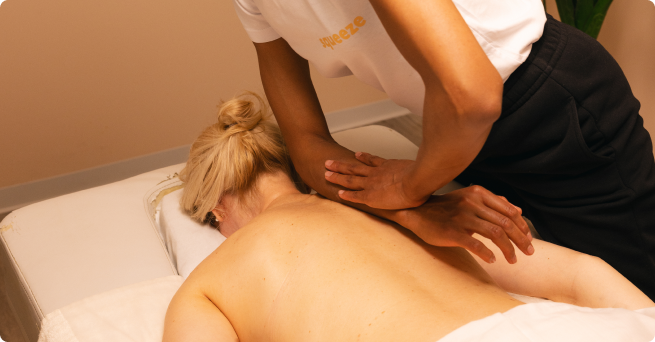
How can massage help?
At Squeeze we have long experience seeing the whole picture of how different techniques affect the body. While massage can't replace sunlight, there are several good reasons why regular massage can be especially useful in winter.
Less stress, more relaxation
Massage lowers stress by calming the body's stress response (the sympathetic nervous system) and activating the body's ability to relax (the parasympathetic nervous system). That creates a deep sense of calm and can counter winter's higher stress and unease.
More energy, better sleep
The rhythmic movements of massage boost blood flow in muscles and tissue. Better circulation can bring a feeling of more energy, useful in a season when energy is often lower than normal. Massage also releases muscle tension and supports relaxation, which improves sleep quality, an important benefit when the dark season challenges a stable rhythm.
More happiness hormones
Massage stimulates the release of endorphins, the body's own pain-relieving and mood-lifting chemicals. That can lift low mood and improve well-being. The natural release of these hormones brings an immediate sense of lightness and calm. Many people feel the positive effect on both body and mind, making daily life feel more pleasant and more alive.
By being aware of how little sunlight affects body and mind, you can take steps that make winter a little easier. Massage is an effective and pleasant way to reduce stress, relieve tension and lift the mood, giving you better conditions to meet the dark months with energy and well-being.
Don't hesitate to contact us at Squeeze for more information on how we can help, whatever the season!